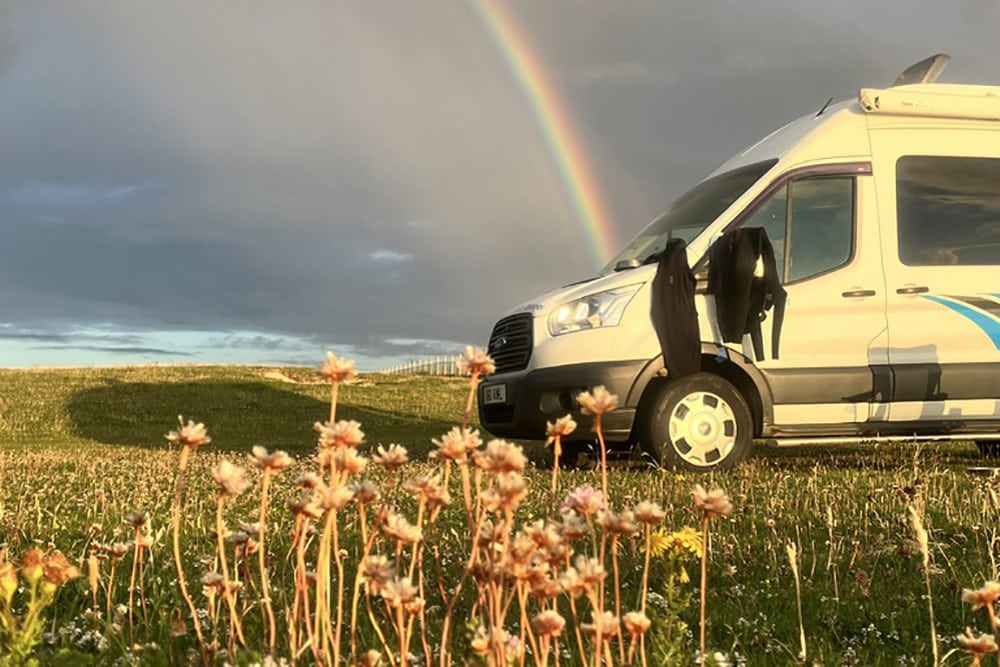
When summer brings the crowds and flat spells to Cornwall, I like to surf somewhere a little wilder, where the days are long and you can get waves to yourself. Where? The rugged Hebridean outpost of the Isle of Lewis.

The first time I set off for the Outer Hebrides in my van, it was just me, my surfboard and my dog. I hadn’t over-thought the adventure that lay ahead, I just wanted to castaway from Cornwall’s heaving line-ups in search of some time to myself, and some waves to myself. The wild Hebridean outpost of Lewis came up trumps – a faraway island with wave-lashed shores, where the summer daylight lingers longer than anywhere else in the UK.
As the ferry departed from Ullapool, a pod of dolphins riding the bow wave, I was hit by the heady excitement and exhilaration of island hopping anywhere in the world. Arriving in Stornaway felt as far removed from the UK mainland as another country. There was no snarling queue of vans topped with surfboards; just me, the open road, my trusty hound, and my less trusty van that needed bump starting each time I killed the engine.

At first my excitement was gobbled up by the fear of being utterly alone. Driving to the northwestern tip of Lewis, the island just felt so remote, and empty. I parked up overlooking Eoropie beach, the most north-westerly break on the island, tucked in the shadow of the Butt of Lewis. One other van camper was soaking up the flamingo-pink sunset, and I settled down for the night, eager to hit the corduroy lines at sunrise.
The magic of that first morning has lived with me since, and it’s at Eoropie that I’ve had some of my most memorable surfs on Lewis. In a place that’s beholden to every ripple of North Atlantic swell, and where the landscape is hewn by wind and waves, even in midsummer, the beaches light up with decent-sized waves sought out by just a handful of surfers. I woke up and clapped eyes on empty 2-3-foot peelers, and my wetsuit was on before the coffee pot whistled. Then I stalled. I’d never paddled out at a completely empty break. Yet alone one I’d never surfed before. In Cornwall there would’ve been at least 20 surfers out already. Here, it was just me.

I sipped my coffee and contemplated the utter beauty, teamed with the isolation. Then I heard a van door slide open and a longboarder skipped down the dunes ahead of me. My heart skipped and I followed. An hour and a half of sliding and gliding later, there were still just three of us sharing the ocean’s bounty. Welcome to Lewis.
A blissed out feeling followed me all day, as I strolled along deserted beaches with just oystercatchers for company, found shipwrecks and empty peaks, and stood on the Butt of Lewis (the most northerly point of the Western Isles), where man-sized seals hunkered from the swell and gannets dived for their dinner. That same blissed out feeling followed my week-long surf trip, and lured me back again, and again.
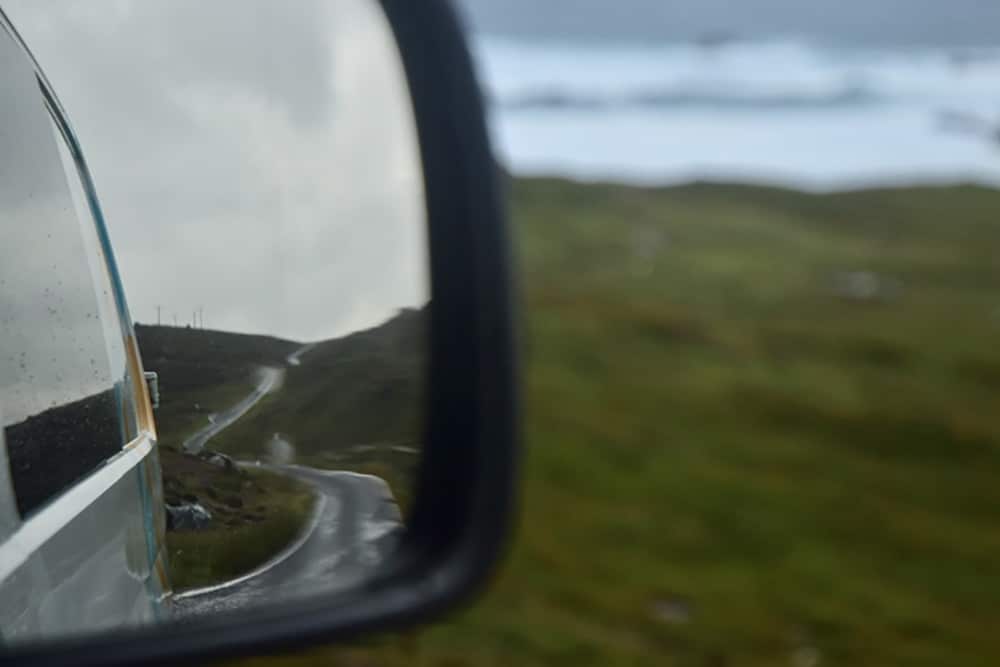
Conditions change quickly in these parts, and rolling up and down the coastline tracking the best spots according to the wind and swell is all part of the adventure. Unless you manage to tap up a local surfer for info (there aren’t many), you’ll put some miles in to strike gold. Guided by online forecasts, an old surfing book, and a few gems of advice from locals, I’ve zig-zagged the island’s roads from north to south – from the boulder reefs of Barvas and Bru, to dreamy Dalmore and the mighty peaks of Mangersta, and back again. And again.
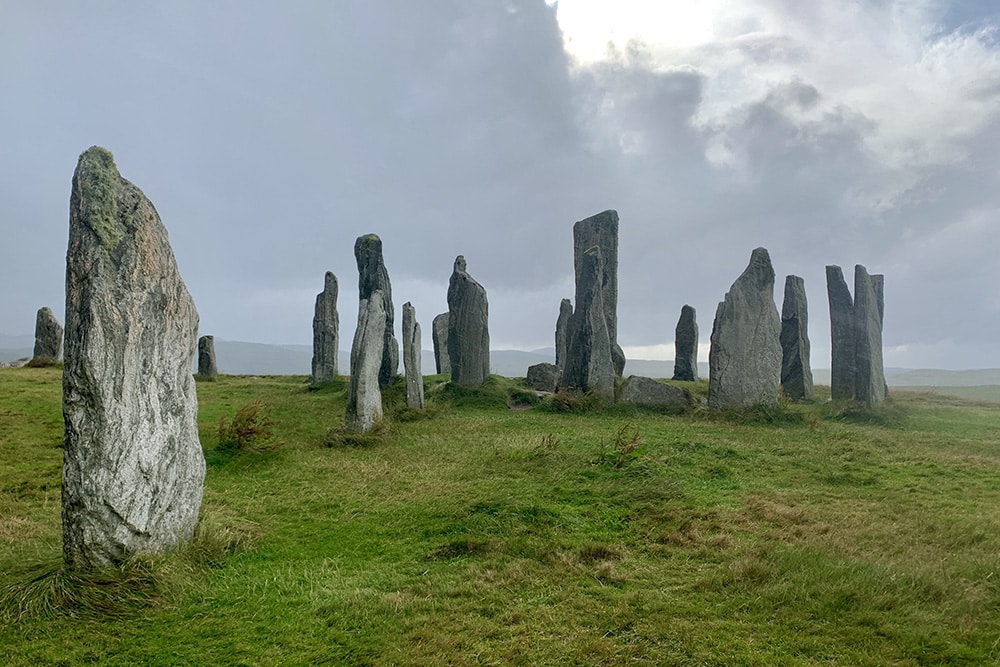
Snaking single-track roads wind from rugged heathland to cliff-hemmed coves, gob-smacking vistas stopping you at every hairpin bend, as you grab for your camera or hit the brakes to avoid a collision with a highland cow. Between surf sessions you can step back into a past rich in ancient rituals, clan warfare and crofting; the mystical standing stones at Callanish, the Iron Age ‘broch’ (roundhouse) at Don Carloway, and the historical blackhouses (traditional croft houses) all harking back to island life throughout the ages.
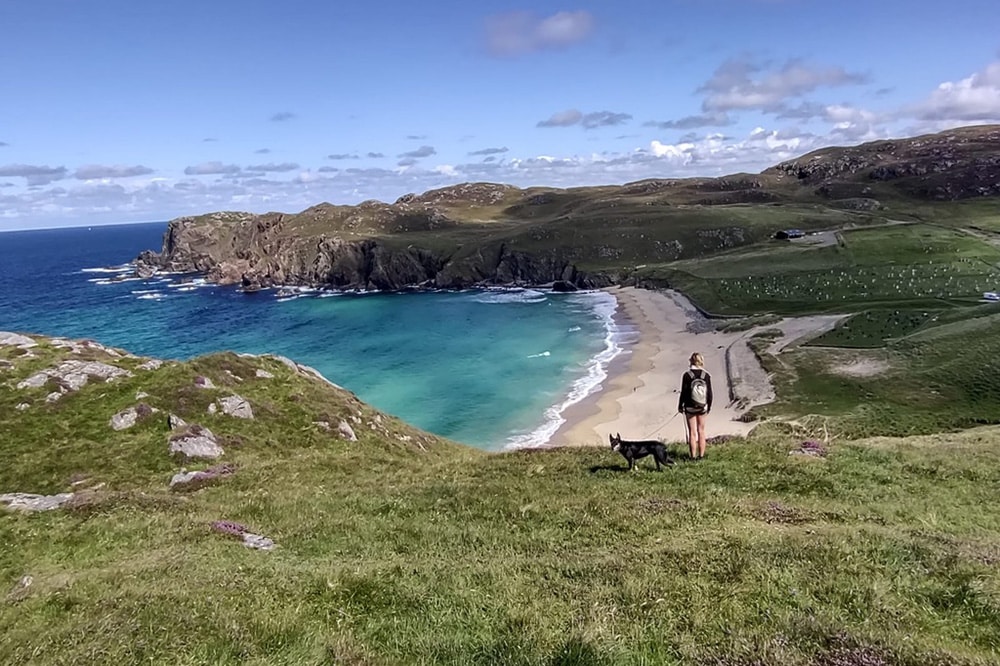
The landscape begs you to don your walking boots and stomp to rugged peaks and hillside lochs; places where your ears ring with the sounds of nature. Or down to paradise coves where you can strip off and float in crystalline waters above starfish-studded sands. At night you might spot wild deer prancing across the sand from your wild camping spot, while you sizzle wild venison on the fire and watch fiery skies turn into starry wonderlands.
You’re on the hunt for surf, but what you find is something much more. The Isle of Lewis is a feast for the eyes, and for the soul. The hunt for waves is simply the conduit for your adventure. It’s a place where you’ll find yourself immersed in the wildness, at the mercy of nature. Van life and self sufficiency are essential. And, unless you’ve really want to surf solo, I’d suggest taking a friend.
Here’s wee guide to surfing on Lewis.
EOROPIE (Eoropaidh)

Eoropie is one of the most popular breaks on the Isle of Lewis. From the shadow of the lighthouse on the Butt of Lewis, it’s just five minutes’ drive to this stunning beach break that catches all the Atlantic swell and flaunts mesmeric sunsets. Low to mid tide is best; expect powerful lefts and rights. There are also reefs to explore on the deserted coves to the west.
Getting there: Take the turning to Ness Cemetery and park carefully on the machair that overlooks the surf, or you can head to the main car park.
BARVAS (Barabhas)
If you’re looking for a long, peeling right-hand boulder reef, seek out this exposed spot at the edge of the loch. Classic on its day, blown out or flat the rest of the time. It’s a decent wave that gets heavy with some size.
Getting there: Follow the track around the loch where the main coast road splits at Barabhas. You can also van camp at the big green bus that’s parked on the machair at Bru – a powerful left-hander on the other side of the bay.
CLIFF (Cliobh)
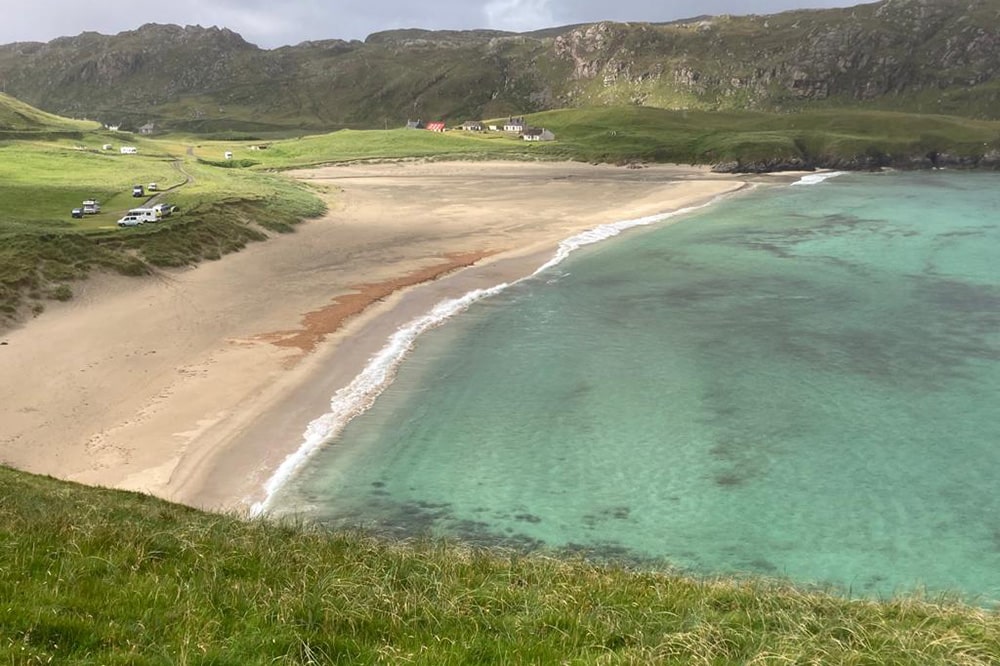
Hands down my favourite camping spot on Lewis, where you can fling open the van door to a sheltered beach break that’s sometimes covered with pink seaweed. It needs more swell than Eoropie and Dalmore, but is a consistent and friendly spot. Make sure you climb the headland and soak up the sublime views. Tread lightly and pay your £5 a night donation to camp.
Getting there: After making your way past the mystical Callanish standing stones and Loch Croistean, take the scenic road around the Bhaltos and follow the left fork to Cliobh.
DALMORE (Dail Mor)
Catch this super-fun right-hander at low tide on a westerly swell. A pristine beach that benefits from the shelter of the cliffs, it’s a good bet when the more exposed Eoropie and Barvas are blown out. Plenty of wildlife including man-size seals.
Getting there: Easy access off the coast road, and there’s a car park with a few flat spots, picnic area, toilet block and water tap, making it a choice place to van camp. A couple of minutes away to the north is also Dalbeg (Dail Beg), another similar beach break that gets a little more size.
MANGERSTA (Mangurstadh)
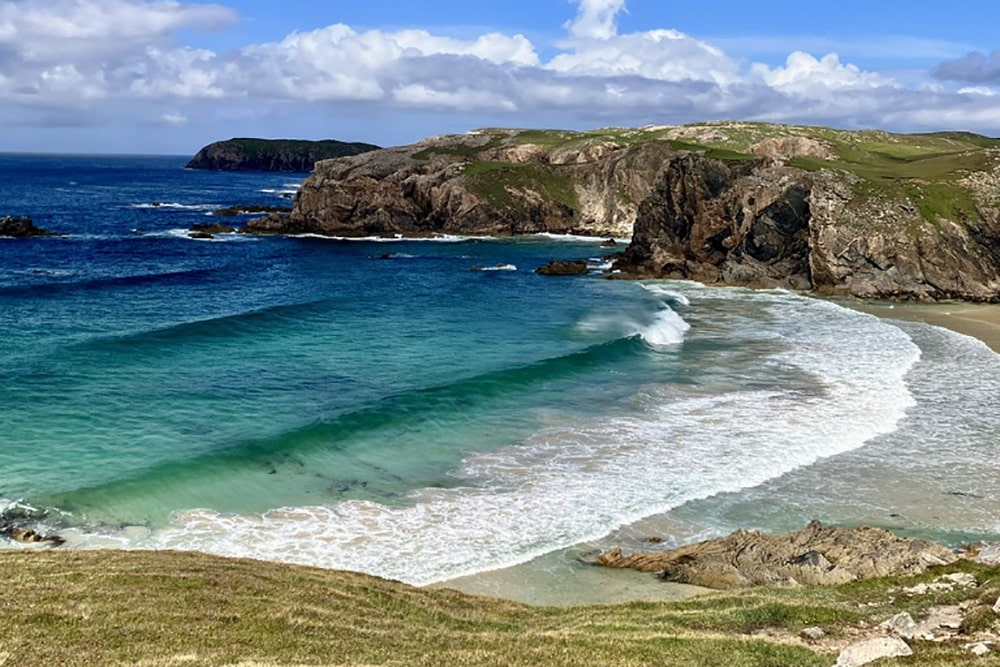
Absolute gold if you get it right. Wild, heavy close-outs when you don’t. Good around mid-tide, with long lefts and rights, in water so ridiculously clear you can find a lost fin on the bottom.
Getting there: Keep going past Uig Sands, park at the side of the road and follow the track to the surf. For van camping head back to Uig Sands or onto Breanais.
How to get to the Isle of Lewis:
Ferry from Ullapool to Stornoway with CalMac ferries. Dog-friendly, 2.5 hour crossing.
The last time I went we paid £123 for a round-trip via Isle of Skye, for a large camper, two adults and two dogs. Way cheaper than a ferry to France!
Freedom seeker
Hit the road
Engine ticking
No fixed abode.
Wilderness beckons
Peaks rolling north
Cerulean ripples
Across the seaforth.
Nature-struck islands
Hewn by the waves
Atlantic-brimmed shores
Adventure filled days.