
Fear. As surfers we’ve all felt it. Standing on the shoreline looking out at the waves. Grovelling under a set. Being churned in the whitewater, not knowing which was is up.

So how do we turn our fear – the paralysis on the shore stopping us paddling out, or the hesitation to paddle into a wave – into motivation, progress and something we can learn from? And even, eventually, something we can enjoy the process of going through?
Just recently I stood on the shoreline and literally cried with fear and frustration. I was desperate to surf, but overwhelmed by the remote and empty break. The size and power of the waves scared me. Despite attempting to paddle out two or three times, I couldn’t break through the impact zone. Was it a physical or psychological barrier, or both?
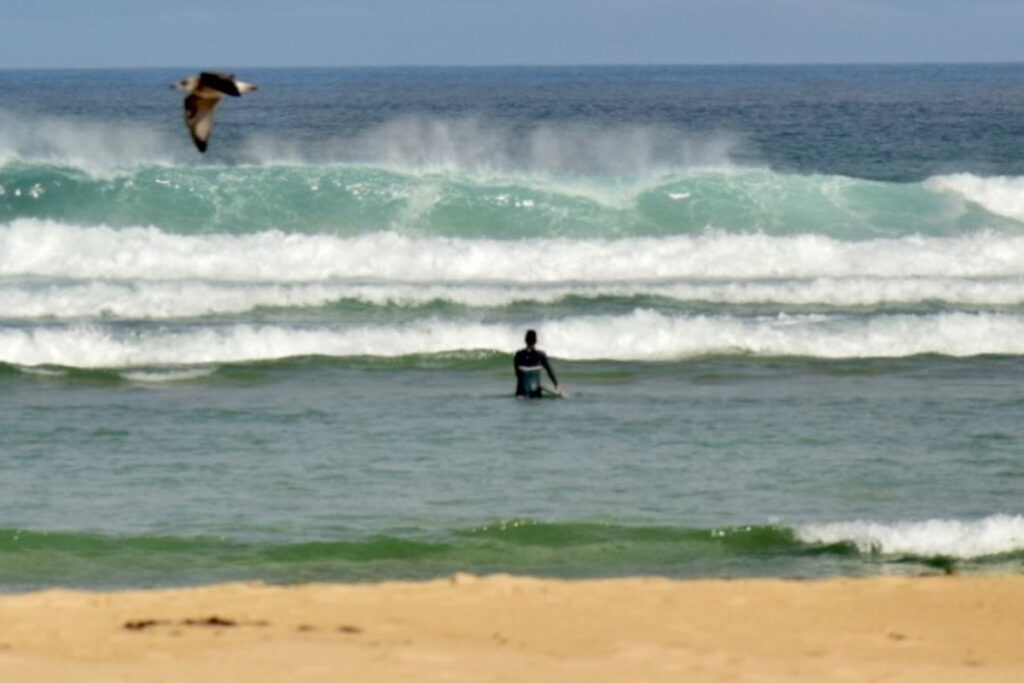
The fear had been creeping in since I woke up and checked the surf. The waves weren’t massive. Just a bit too big for my liking. Teetering on the edge of my comfort zone. And at the north-west tip of a remote island that copped the brunt of the Atlantic swell. On home turf I probably wouldn’t have overthought it. But here, the length of the paddle out, unfamiliar territory, and just two of us to tackle it, made me think twice. To be honest, I’d talked myself out of it before we even got to the beach.
Fear blocked my ability, sapped my strength and ditched excitement for panic. After a few half-hearted attempts to get out back, I ended up back on the beach berating myself. Listening to that voice that tells you how shit and incapable you are.
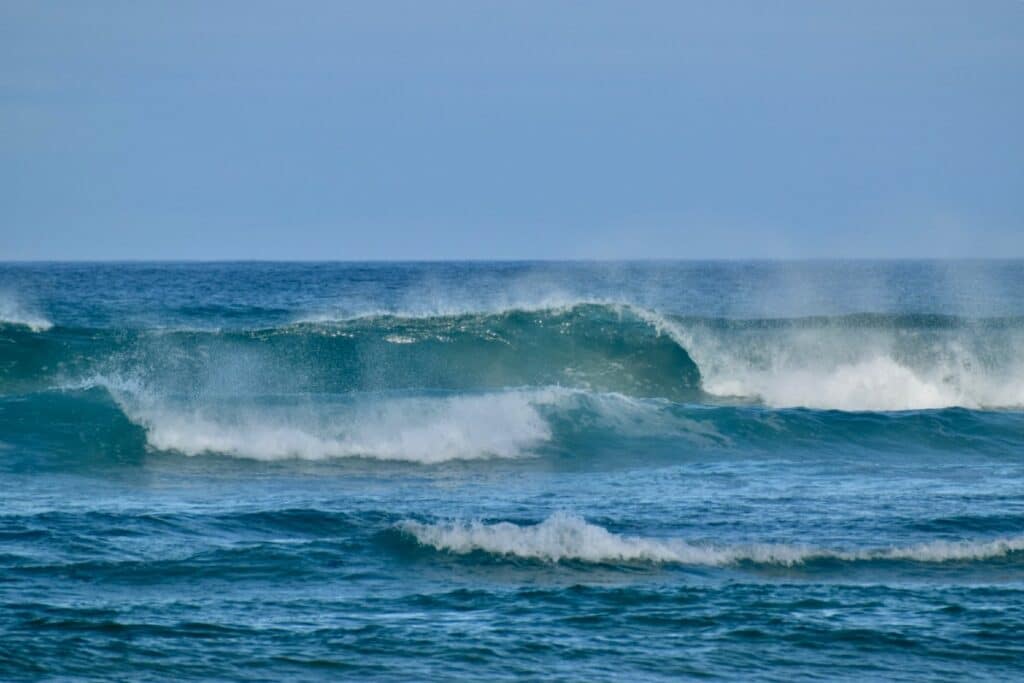
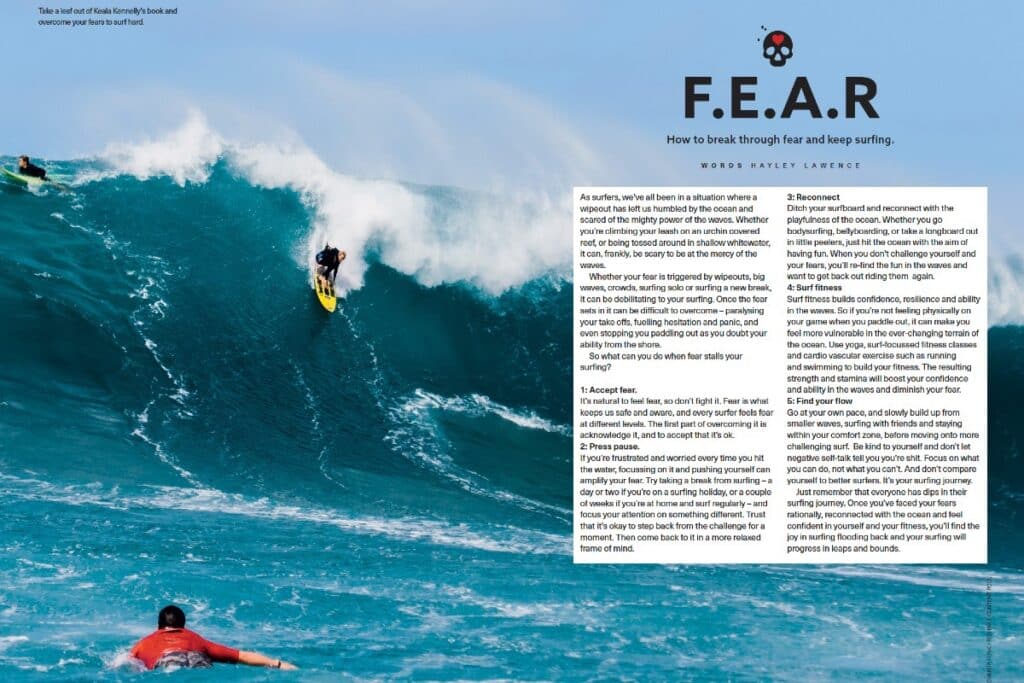
I know I dealt with it all wrong. Ironically I wrote a feature about Fear for SurfGirl recently and ignored all of my own advice. So, what should I have done instead of letting the negativity feed into my surfing and other areas of my psyche?
The first step is breathe and accept your fear. Every surfer feels fear at different levels, and that’s ok. If you fight it, it often amplifies. Acceptance is key to coming out the other side of any emotion and letting it go.
With the consequences of surfing in challenging conditions, you can’t always confront the situation with the old adage, ‘feel the fear and do it anyway’. Yes, you might go out there and get the waves of your life. Or, if it’s really beyond your limits, you might go out there and get an absolute beating.
So, once you’ve accepted your fear and calmed down by connecting with your breath, try and assess the conditions with a more considered mind. Is the paddle really beyond your limitations, or is that your negative brain talking? Is there anyone out there to use as a reference for the size of the face, the speed of the take off and the ability required? Is your level of fear disproportionate to the situation?
While it’s always good to hear the encouraging comments of: “Come on, you’ve surfed bigger waves than that,” it’s not that easy to come out the other side of the fear spiral. Sometimes it’s best to just walk away and re-approach the waves when you’re in a more confident, focussed and playful mindset. When you’re frustrated and cross with yourself, surfing can be a battle against the ocean and ourselves.

What I did do was walk away and let it go for a few hours. I went for a run to a stunning headland, revelled in the detail of the wildflowers and listened to the trill of the oystercatchers. I dipped in the saltwater, wrote, and I let my emotions spin into the salty breeze. And I waited for the tide and swell to drop before trying again.
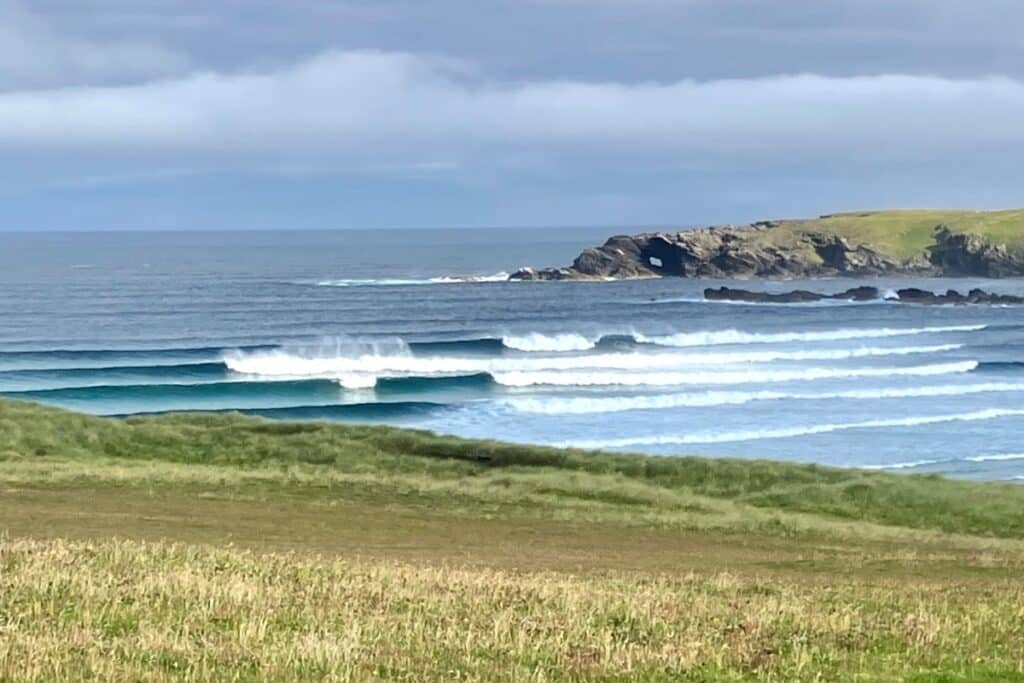
By the time I surfaced from the fear cycle, I didn’t get a second chance in those same conditions. The waves were smaller and more playful, but still crystal clean with peeling walls. There were a couple more surfers in the water, which was both a relief and a little bit annoying I hadn’t snagged the opportunity for empty perfection.
Surfing can be like a mirror to our greatest fears and vulnerabilities. Surely there is no other sport so emotional and interlinked with mind and soul. But when we go from that journey of being paralysed with fear on the shoreline, to gliding along the waves in tune with ourselves and Mother Nature, fear becomes a natural and – eventually – enjoyable part of the process of riding the waves.
Practical tips to overcoming your fear in the surf:
- Breathe. Connecting with your breath instills a calm that you can connect to when you’re panicking in the waves or on the shoreline.
- Acknowledge your fear and accept that it’s ok to feel it. Every surfer feels fear at different levels. Fighting fear can amplify it.
- Watch the waves and assess the situation. Is there anyone out there to use as a reference for the size of the face, the speed of the take off and the ability required? How does your ability compare and is your level of fear disproportionate to the situation?
- Pause and take a break from surfing. Don’t push yourself to go back in if you can’t find your mojo.
- Work on your fitness so that you have the ability, capacity and mind-set to tackle bigger waves.
- Re-find your flow by surfing smaller waves, surfing with friends and playing in the ocean.
Read Feel the Fear and Do It Anyway, by Susan Jeffers, a compendium of practical advice for overcoming fear that is stalling you in everyday life.